
Need Help?
Office No. 35A, Amanora Chambers, Amanora Town Centre, Hadapsar, Pune, Maharashtra
Open in Maps pgagrisolutions@gmail.com +91 79766 87037Micronutrient Fertilizer Manufacturers in Jaipur – Pure Grow Agri Solution
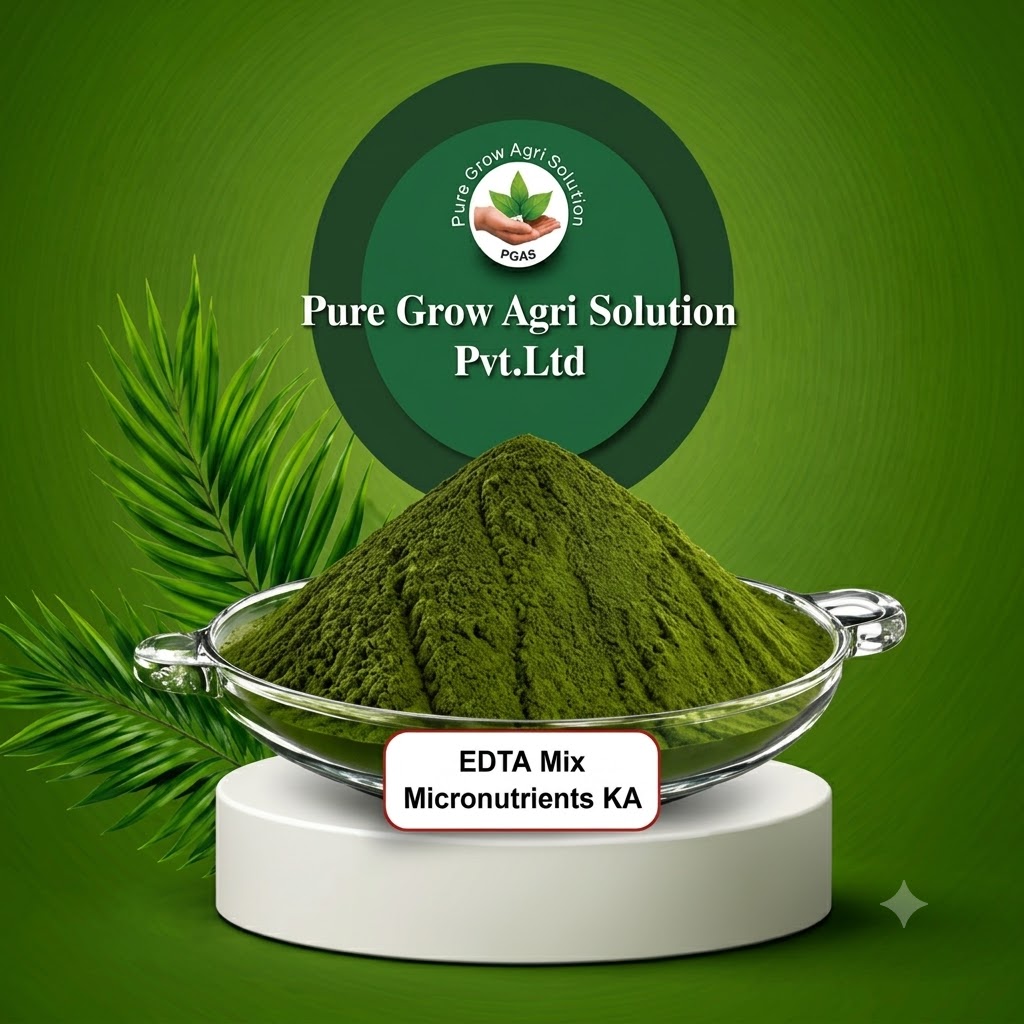


Pure Grow Agri Solutions Pvt. Ltd. ranks among the prominent Basic Micronutrient Fertilizer Exporters, Traders, Dealers, Suppliers and Manufacturers in Jaipur. Our quality agricultural micronutrient products are made to promote balanced plant nutrition and support healthy crop growth.
Fertilizer dealers, distributors, agri-input retailers, manufacturers and bulk purchasers searching for dependable micronutrient solutions form our customer base. The product range includes basic micronutrients, chelated micronutrients and specialized fertilizer ingredients that fulfil varied agricultural and crop nutrition requirements.
Our effort goes into offering suitable product choices for efficient nutrient management, so customers can source the essential plant nutrients their agricultural applications call for. With a customer-oriented approach, we aim to build long-term business partnerships through reliable service, steady support and quick replies to product enquiries.
Why Do Crops Need Micronutrients?
Plants take up micronutrients in tiny amounts, yet these nutrients are vital for proper growth and no other nutrient can stand in for them. Zinc activates enzymes and regulates growth hormones, whereas iron and magnesium help form chlorophyll and keep foliage green. Manganese assists photosynthesis, copper strengthens tissue, boron supports flowering and fruit development, and molybdenum lets legumes use nitrogen efficiently. When any of these is lacking, growth can be restricted, and extra NPK fertilizer alone cannot fix it.
Leaves are usually the first to show a warning sign:
| Nutrient | Primary role in the plant | Sign of a shortage |
|---|---|---|
| Zinc | Enzymes, growth hormones and protein | Stunted plants, small leaves, khaira disease in rice, white bud in maize |
| Iron | Forms chlorophyll | Young leaves yellow while veins remain green |
| Manganese | Photosynthesis and enzyme activation | Pale patches between veins, frequent on light or alkaline soil |
| Copper | Tissue strength and grain set | Wilted tips, dieback and poorly filled grain |
| Magnesium | Core of the chlorophyll molecule | Older leaves yellow between the veins |
| Boron | Cell walls, pollen and fruit set | Flower drop, hollow stems and cracked fruit |
| Molybdenum | Fixing and using nitrogen | Pale leaves and weak nodulation in pulses |
| Calcium | Cell walls and root tips | Tip burn and blossom-end rot |
Correcting micronutrient deficiencies can lift crop performance, giving stronger seedlings, better flowering, even fruit and grain development and greater tolerance to heat and dry spells. Nutrient absorption changes with soil pH, organic matter content and the chemical form of each nutrient applied. Knowing these factors explains why the different micronutrient types discussed below matter.
Kinds of Micronutrient Fertilizers
As Basic Micronutrient Fertilizer Dealers, Exporters, Suppliers, Traders and Manufacturers in Jaipur, we provide a diverse range of agricultural micronutrient solutions for varied crop nutrition requirements.
Micronutrient products come in four broad types. Each one addresses a different problem, and most farms end up using more than one.
- 1. Single-Nutrient Micronutrient Fertilizers: Each of these fertilizers delivers one specific trace element, such as zinc sulphate, ferrous sulphate or borax. They are especially handy when soil or leaf analysis points to a single nutrient deficiency, and they restore the required nutrient balance at a modest cost. Our single-nutrient portfolio includes Zinc Sulphate 21% and 33%, Ferrous Sulphate 19%, Magnesium Sulphate 9.5%, Manganese Sulphate 30.5%, Copper Sulphate 24%, Borax 15%, Borax 10.5%, Boron 20% (Turkey) and Ammonium Molybdenum.
- 2. Multi-Element Micronutrient Blends: These products carry several essential trace elements and commonly combine zinc, iron, manganese, copper and boron in one blend. They suit routine nutrient supplementation, deficient soils and crops that need several micronutrients during their growth cycle. A combined formulation also makes buying and applying fertilizer simpler. Our range includes EDTA Mix Micronutrients G-1, G-2, Gujarat Grade, KA Grade, RJ Grade and Drip Grade.
- 3. Chelated Micronutrient Products: In chelated fertilizers, metal nutrients are bound to organic compounds such as EDTA or EDDHA, which keeps them available and lowers the risk of precipitation or fixation in soil. As a result, roots and leaves can reach the nutrients more easily. These formulations are particularly valuable in alkaline soils and high-pH conditions, where conventional sulphate fertilizers can lose availability, and wherever efficient nutrient absorption is a priority. Our chelated range includes EDTA Zinc 12%, Ferrous 12%, Copper 12%, Manganese 12%, Calcium 9%, Magnesium 6% and EDDHA Ferrous 6%.
- 4. Liquid and Foliar Micronutrient Products: These fertilizers come in liquid or water-soluble forms and can be sprayed on foliage or sent through compatible drip irrigation systems. Foliar application puts nutrients straight onto the leaves, which helps when certain deficiencies must be handled or crops need support at critical stages such as flowering. Our liquid and foliar portfolio includes Mix Micronutrient Liquid G-1, G-2 and G-6, Boron Liquid 11% and EDTA Drip Grade.
| Type | Ideal when | Products we offer |
|---|---|---|
| Single-element | A test confirms a single deficiency | Six sulphates, borax, boron and molybdenum |
| Mixed | You need all-round cover | EDTA mix grades G-1, G-2, state grades and Drip |
| Chelated | Soil is alkaline or quick uptake is needed | Grades in EDTA and EDDHA |
| Liquid and foliar | The crop already shows symptoms | Liquid mix, Boron Liquid and Drip grade |
Single-Element Range: Traditional Sulphate Fertilizers: Sulphate-based micronutrients are in wide use for correcting individual nutrient deficiencies in crops. They usually dissolve in water, supply sulphur along with the essential metal, and can go on through soil treatment or foliar spraying, as the crop requires.
Zinc Sulphate 21%: Zinc Sulphate 21% is usually supplied as zinc sulphate heptahydrate (ZnSO₄·7H₂O), a white crystalline material that dissolves easily in water and so works well for foliar applications. It helps correct zinc deficiency in rice, wheat, maize, sugarcane, cotton, grapes, pomegranate and many vegetables. Farmers can mix it into the basal fertilizer dose before planting, or spray it when plants show restricted growth, undersized leaves or clustered foliage.
Zinc Sulphate 33%: This grade is made in the monohydrate form (ZnSO₄·H₂O) and holds more zinc per unit weight. It therefore needs less material per acre and can cut transportation costs. Fertilizer manufacturers, dealers and commercial growers often prefer it for soil application and for blending into NPK fertilizer formulations.
Ferrous Sulphate 19%: Ferrous Sulphate 19% is made up of greenish ferrous sulphate heptahydrate crystals and gives crops both iron and sulphur. It is used on groundnut, sugarcane, banana, citrus, vegetables and ornamental plants hit by iron deficiency, usually seen as yellowing of younger leaves while the veins stay green. In mild cases, a foliar treatment may bring a fairly quick response. Iron availability, however, drops sharply in calcareous and alkaline soils, where EDDHA-chelated iron is generally the better choice.
Magnesium Sulphate 9.5%: This easily soluble crystalline fertilizer provides magnesium together with sulphur and supports essential plant functions. It suits banana, grapes, citrus, cotton, pulses and vegetables, especially in sandy or acidic soils where leaching can wash magnesium away. Yellowing between the veins of older leaves often signals a deficiency. As the crop and application needs dictate, the product can be applied to the soil or sprayed directly on leaves.
Manganese Sulphate 30.5%: Manganese Sulphate 30.5% is a concentrated monohydrate formulation for crops that need sufficient manganese, among them sugarcane, wheat, soybean, citrus and potato. Deficiencies often appear in light-textured, alkaline or organic-matter-rich soils. It can be applied by soil treatment or foliar spraying, and it is also widely blended into mixed micronutrient fertilizers.
Copper Sulphate 24%: Supplied as blue copper sulphate pentahydrate crystals, this fertilizer-grade product gives crops copper, an essential trace element for normal plant development. Since crops need copper in very small amounts and too much can harm plants, application rates must follow crop-specific recommendations. It is used on citrus, wheat, vegetables and fruit trees, and extra care is needed when treating sandy or peaty soils.
Borax 15%, Borax 10.5%, and Boron 20% (Turkey): Boron supports pollen development, successful flowering and proper fruit formation, which makes it a key nutrient for reproductive growth. Boron deficiencies can easily go unnoticed, so it is important to select a grade that fits the crop, the application technique and the budget. These products are commonly used on cotton, groundnut, pomegranate, grapes, cauliflower and tomato, through soil application or carefully managed foliar spraying.
Ammonium Molybdenum (Phosphate Grade): This formulation supplies molybdenum, a trace nutrient that is essential for nitrogen metabolism and effective nodulation in pulses and oilseed crops. It also helps prevent whiptail, a typical deficiency disorder in cauliflower and other brassica crops. Because plants need molybdenum in extremely small amounts, application rates must stay low and precise, and a fairly small quantity of fertilizer is enough to cover crop needs.
| Product | Active content | Form | Best suited for |
|---|---|---|---|
| Zinc Sulphate 21% | Zn 21% | Heptahydrate crystals | Cereals, vegetables and foliar sprays |
| Zinc Sulphate 33% | Zn 33% | Monohydrate powder | NPK blending and bulk soil use |
| Ferrous Sulphate 19% | Fe 19% | Heptahydrate crystals | Iron chlorosis in neutral and acidic soil |
| Magnesium Sulphate 9.5% | Mg 9.5% | Crystals | Fruit crops and sandy or acidic soils |
| Manganese Sulphate 30.5% | Mn 30.5% | Monohydrate powder | Citrus, sugarcane, wheat and soybean |
| Copper Sulphate 24% | Cu 24% | Pentahydrate crystals | Vegetables, citrus and wheat |
The Chelated Range: EDTA and EDDHA: EDTA chelates dissolve quickly in water, blend easily with many fertilizers and are often preferred for foliar sprays and drip fertigation. Their stable structure keeps nutrients available for plant absorption. EDDHA chelates are particularly useful in alkaline soils, where iron availability is limited.
| Product | Content | Usual use |
|---|---|---|
| EDTA Zinc 12% | Zn 12% | Fruit crops, vegetables, cotton and cereals |
| EDTA Ferrous 12% | Fe 12% | Chlorosis in flowers, fruits and vegetables |
| EDTA Copper 12% | Cu 12% | Grapes, citrus and vegetables |
| EDTA Manganese 12% | Mn 12% | Wheat, soybean and sugarcane |
| EDTA Calcium 9% | Ca 9% | Firm fruit; helps with tip burn and blossom-end rot |
| EDTA Magnesium 6% | Mg 6% | Vegetables, grapes, citrus and banana |
EDDHA Ferrous 6% (ortho-ortho): EDTA iron stays effective up to about pH 6.5, and above that level a more stable chelate is needed. EDDHA iron stays available over a wider pH range, so it suits alkaline, calcareous and black soils in which conventional iron fertilizers perform poorly. Its cost per kilogram is higher, but it gives dependable results in difficult soil conditions.
Micronutrient mixes
A balanced mix saves time and removes guesswork when a crop needs several elements together.
EDTA Mix Micronutrients G-1 and G-2: all-purpose mixes for field crops, vegetables and orchards.
Gujarat Grade, KA Grade and RJ Grade: formulations designed around the soils and nutrient needs of those regions.
- EDTA Mix Micronutrients Drip: completely soluble and built for fertigation, leaving no residue to block emitters. We also supply targeted combinations for particular growth stages:
EDTA Calcium + Boron (10% + 2%): aids fruit set and firmness while reducing cracking.
EDTA Calcium + Magnesium + Boron (6% + 6% + 2%): a three-nutrient formula for fruit and vegetable crops.
EDTA Zinc + Boron (13% + 3%): supports flowering and the early development of grain or bolls.
Liquid and foliar solutions: Once symptoms are visible, speed counts. Mix Micronutrient Liquid G-1, 2, 6 and Boron Liquid 11% can be diluted and sprayed right away, while the Drip grade travels through irrigation lines and feeds the root zone steadily. For best results, spray in the early morning or late afternoon.
From Soil to Plate: Why Micronutrients Matter
Nutritious food begins with healthy soil. Minerals such as zinc, iron and manganese are vital for plant growth and help shape the nutritional value of harvested crops. If the soil lacks these essential elements, plants may suffer nutrient deficiencies, which is why balanced soil nutrition matters for growing quality agricultural produce.
Puregrow specializes in agricultural micronutrients, not in human vitamin supplements. We provide vital plant nutrients, including zinc, iron, copper, manganese, boron and molybdenum, to encourage healthy crop growth and balanced mineral uptake. By helping to correct micronutrient deficiencies in plants, we strengthen crop nutrition and play a part in the journey from fertile soil to a healthier food supply.
Which Type Is Right for You?
| Sulphates | EDTA chelates | EDDHA iron | |
|---|---|---|---|
| Price per kg of nutrient | Lowest | Medium | Highest |
| Soil pH range handled | Neutral to acidic soils | Iron works up to about pH 6.5; zinc and copper cover a wider range | Broad, alkaline soil included |
| Preferred application | Soil, basal or foliar | Foliar or fertigation | Soil or drip |
| Behaviour in a tank mix | May react with certain products | Compatible with most fertilizers | Remains stable |
| Pick it when | A low-cost correction is the goal | Fast, efficient uptake is needed | Iron shortage lingers in alkaline soil |
As a general rule, choose sulphates for routine soil correction, chelates and liquids for foliar and drip programs, and EDDHA when an iron shortage persists in high-pH soil.
Why Micronutrients Matter in Crop Production
As Basic Micronutrient Fertilizer Traders, Suppliers, Exporters, Manufacturers and Dealers in Jaipur, we provide agricultural nutrient solutions that encourage balanced plant nutrition, support crop development and improve nutrient management practices.
Micronutrients have an important part in plant growth, crop performance and the quality of agricultural produce. Plants need these elements only in relatively small amounts, but a shortage can restrict development and reduce the benefits of a balanced fertilizer programme.
- Promotes healthy crop growth: Backs normal plant development and helps crops reach their growth and yield potential.
- Helps prevent nutrient deficiencies: Soil testing and plant analysis reveal nutrient imbalances before deficiencies turn severe.
- Supports soil fertility: Topping up essential trace elements adds to balanced soil nutrition and long-term fertility management.
- Enhances nutrient uptake: Suitable soil conditions raise the availability and absorption of essential plant nutrients.
- Maintains produce quality: A sufficient micronutrient supply backs proper crop development and the nutritional quality of harvested produce.
What Micronutrients Do in Plants
As Basic Micronutrient Fertilizer Manufacturers, Dealers, Traders, Exporters and Suppliers in Jaipur, we supply specialized agricultural nutrition products that help sustain essential plant functions, encourage healthy development and support balanced crop nutrition.
Each plant nutrient has its own distinct function and contributes to the growth, development and physiological processes of crops.
- Zinc: Helps control enzyme activity, protein synthesis and plant growth processes.
- Iron: Plays a part in chlorophyll formation and supports photosynthetic activity.
- Manganese: Aids photosynthesis and activates key plant enzymes.
- Copper: Backs enzyme functions and adds to normal tissue development.
- Boron: Takes part in cell-wall formation, flowering, pollen development and fruit setting.
- Molybdenum: Backs nitrogen metabolism and helps plants make effective use of nitrogen.
- Magnesium: Sits at the centre of the chlorophyll molecule and is essential for photosynthesis. It is classed as a secondary macronutrient.
- Calcium: Adds to cell-wall strength, membrane function and root development. It too is categorized as a secondary macronutrient.
How Farmers Benefit from Micronutrients
As Basic Micronutrient Fertilizer Suppliers, Exporters, Dealers, Traders and Manufacturers in Jaipur, we offer agricultural nutrient solutions that help farmers handle crop deficiencies, keep plants healthy and make crop nutrition programmes more efficient.
Good micronutrient management corrects nutrient imbalances, backs normal crop development and leads to more effective agricultural practices.
- Healthy plant development: Provides the essential trace elements required for normal growth and physiological functions.
- Improved flowering and fruit formation: Aids reproductive growth, pollination and fruit development once nutrient deficiencies are corrected.
- Enhanced produce quality: Keeps desirable crop characteristics intact and improves agricultural marketability.
- Efficient fertilizer management: Works alongside nitrogen, phosphorus and potassium by meeting micronutrient needs inside a balanced fertilization strategy.
- Supports nutritional quality: Enough trace elements can add to the mineral composition of harvested agricultural produce.
Puregrow offers a diverse range of agricultural micronutrient products for different crop nutrition requirements. Our approach centres on helping farmers, distributors, dealers and other agri businesses choose suitable nutrient solutions for effective crop management and balanced plant nutrition.
How Should Micronutrients Be Applied?
Begin with a soil or leaf test. The ranges below are commonly used in extension guidance, but your crop, soil and growth stage may alter them, so confirm with our agronomist first.
| Product | Soil dose (per hectare) | Foliar spray concentration (in water) |
|---|---|---|
| Zinc Sulphate | 20 to 25 kg | 0.2% to 0.5% |
| Ferrous Sulphate | 25 to 50 kg | 0.5% |
| Magnesium Sulphate | 20 to 40 kg | 1% to 2% |
| Manganese Sulphate | 10 to 20 kg | 0.2% to 0.5% |
| Copper Sulphate | 5 to 10 kg | 0.1% to 0.2% |
| Borax | 5 to 10 kg | 0.1% to 0.2% |
Avoid spraying under strong midday sun. Run a small jar test before combining products in one tank, do not mix sulphates with phosphate-heavy or calcium-heavy products without testing, and never exceed the recommended dose, because too much of a micronutrient can harm a crop as much as too little.
Whom Do We Supply, and Where?
- Individual farmers and farmer groups
- Dealers and retailers of agri inputs
- Wholesalers and traders
- Fertilizer formulators and blenders
- Importers and exporters
We operate from Jaipur and dispatch across Rajasthan, including Jaipur district, Jodhpur, Udaipur, Kota, Ajmer, Alwar and Sikar, and onward to Gujarat, Haryana, Madhya Pradesh, Uttar Pradesh and the rest of India. Export enquiries are welcome.
How Does Ordering Work?
- Tell us what you need. Give us the crop, area, soil type and target nutrient, or just the grade and quantity.
- Get a quote. We respond with the suitable grade, pack sizes and price for your quantity.
- Confirm and we dispatch. Once you confirm, we arrange road dispatch within India or the paperwork for export.
- Receive support. Our team answers questions on dose, timing or mixing.
Why Do Buyers Prefer Pure Grow?
As Basic Micronutrient Fertilizer Dealers, Manufacturers, Suppliers, Exporters and Traders in Jaipur, we bring together industry experience, a comprehensive product range and customer-focused service to meet the diverse needs of agri businesses in search of reliable micronutrient solutions.
- Over a Decade of Industry Experience: Having spent more than 10 years in crop nutrition, we help customers select micronutrient grades that fit their agricultural needs.
- Extensive Product Portfolio: Basic sulphates, EDTA chelates, micronutrient mixtures, boron formulations and molybdenum products are all available together in one convenient range.
- Crop Nutrition Assistance: We guide customers towards suitable product grades and application practices based on crop requirements, soil conditions and plant growth stages.
- Bulk Orders and Export Support: Bulk purchasing enquiries from dealers and traders are welcome, and we offer the relevant documentation support for export orders, subject to applicable regulations.
- Quality-Focused Supply: Product specifications and batch-to-batch consistency are our focus, which makes sourcing reliable and builds customer trust.
Choose Pure Grow Agri Solutions Pvt. Ltd. is a well-known name among Basic Micronutrient Fertilizer Exporters, Traders, Dealers, Suppliers and Manufacturers in Jaipur. We aim to form strong partnerships with agricultural businesses by supplying dependable micronutrient products that match their requirements. Our approach stresses understanding what customers need and recommending suitable product options for balanced crop nutrition and efficient nutrient management. Whether you work as a dealer, distributor or bulk purchaser, your enquiries are welcome, and we look forward to long-term business associations built on prompt assistance and steady product support. Contact us today to find out more about what we offer.
FAQs on Micronutrient Fertilizers
Micronutrient fertilizers provide essential trace elements like zinc, iron, manganese, copper, boron and molybdenum. Crops need these nutrients only in small quantities, yet they play important roles in plant growth, flowering, photosynthesis and overall crop development.
Pure Grow Agri Solutions Pvt. Ltd. supplies a variety of agricultural micronutrient products, such as single-element sulphates, mixed micronutrient formulations, EDTA-chelated nutrients, EDDHA iron and liquid micronutrient products. Availability depends on the grade required and the product specifications.
Zinc Sulphate 21% is usually supplied as heptahydrate and holds less zinc per kilogram than Zinc Sulphate 33%, which is commonly available as monohydrate. The right grade depends on the crop's zinc needs, the application method and the fertilizer formulation.
Chelated micronutrients help when soil conditions limit nutrient availability or when a suitable foliar or fertigation product is needed. EDTA chelates are commonly used in foliar applications and drip systems, whereas EDDHA-chelated iron is especially suited to alkaline and calcareous soils.
Typical symptoms are yellowing leaves, stunted growth, smaller leaves, poor flowering and abnormal fruit development. Symptoms do vary by nutrient and crop, though. Soil testing, leaf analysis and professional agricultural advice can pinpoint the underlying deficiency before a suitable fertilizer is chosen.
Compatibility depends on the micronutrient formulation and on the other products involved. Some combinations can cause precipitation, lower nutrient availability or application problems. Read the product instructions, run a compatibility test where suitable and speak to a qualified agricultural professional before mixing fertilizers or pesticides.
The right product depends on the crop type, soil pH, existing nutrient levels, growth stage and application method. Single-element fertilizers work for specific deficiencies, and mixed formulations can supply several trace elements. Soil or leaf test results can guide the choice.
Yes, bulk supply enquiries from fertilizer dealers, distributors, agri-input retailers, manufacturers and commercial buyers are welcome at Puregrow. Customers can send the grade they need, quantity, packaging preferences and delivery location to ask about availability and pricing.
Export enquiries for the agricultural micronutrient range are welcome at Puregrow. Buyers can share the destination country, grades required, order quantities and packaging preferences to discuss availability, quotations and the relevant export documentation, subject to applicable regulations.
Get in touch with Puregrow and mention the micronutrient fertilizer you need, along with its grade, nutrient concentration, quantity, packaging and delivery destination. Our team will review your enquiry and share the relevant product information and a quotation based on availability and order requirements.